Pros, Cons, and Everything You Need to Know
In North Houston, outdoor living spaces are no longer an afterthought—they’re an extension of the home. From resort-style pools to refined outdoor kitchens and manicured landscapes, today’s homeowners want beauty, performance, and longevity. Artificial turf has quickly become a popular solution for achieving a polished, evergreen look without the ongoing demands of natural grass.
But is artificial turf the right choice for your backyard?
As a premium custom pool and outdoor living builder serving North Houston, we believe the answer depends on thoughtful design, proper installation, and how the space will be used. Below is a complete, honest look at the pros, cons, and considerations of artificial turf—so you can make a confident, informed decision.
The Pros of Artificial Turf
A Consistently Refined Aesthetic
One of turf’s greatest advantages is its visual impact. Artificial turf delivers a lush, uniform appearance year-round—no bare spots, no seasonal discoloration, no uneven growth. When integrated properly, it creates a clean, architectural backdrop that complements modern pools, patios, and outdoor living spaces beautifully. Around pools especially, turf provides a crisp contrast to stone, concrete, and water features.
Exceptionally Low Maintenance
For homeowners who value their time, artificial turf offers a compelling advantage. There’s no mowing, edging, fertilizing, or reseeding. Maintenance is limited to occasional brushing and rinsing, making turf ideal for busy families or second homes where upkeep needs to be minimal.
Significant Water Conservation
In climates like North Houston, where summers are long and irrigation demands are high, artificial turf can dramatically reduce water usage. Eliminating the need for regular watering not only lowers utility bills but also supports more sustainable landscape design—an increasingly important consideration for modern homeowners.
Pet- and Family-Friendly
High-quality turf products are designed to withstand active lifestyles. For pets, turf eliminates muddy paws and worn-down patches while offering easy cleanup and odor-control options when properly maintained. For children, it provides a soft, even surface ideal for play areas, reducing slips and scrapes compared to uneven natural grass.
Long-Term Durability
When professionally installed, premium artificial turf can last 10–20 years. It’s engineered to resist UV exposure, heavy foot traffic, and weather extremes without fading or breaking down—making it a smart long-term investment for outdoor spaces that see regular use.
No Weeds, No Pests
Because turf doesn’t support organic growth, weeds, insects, and lawn diseases are virtually eliminated. This means no chemical treatments, no pest control cycles, and no surprise maintenance issues over time.
A Range of Styles and Applications
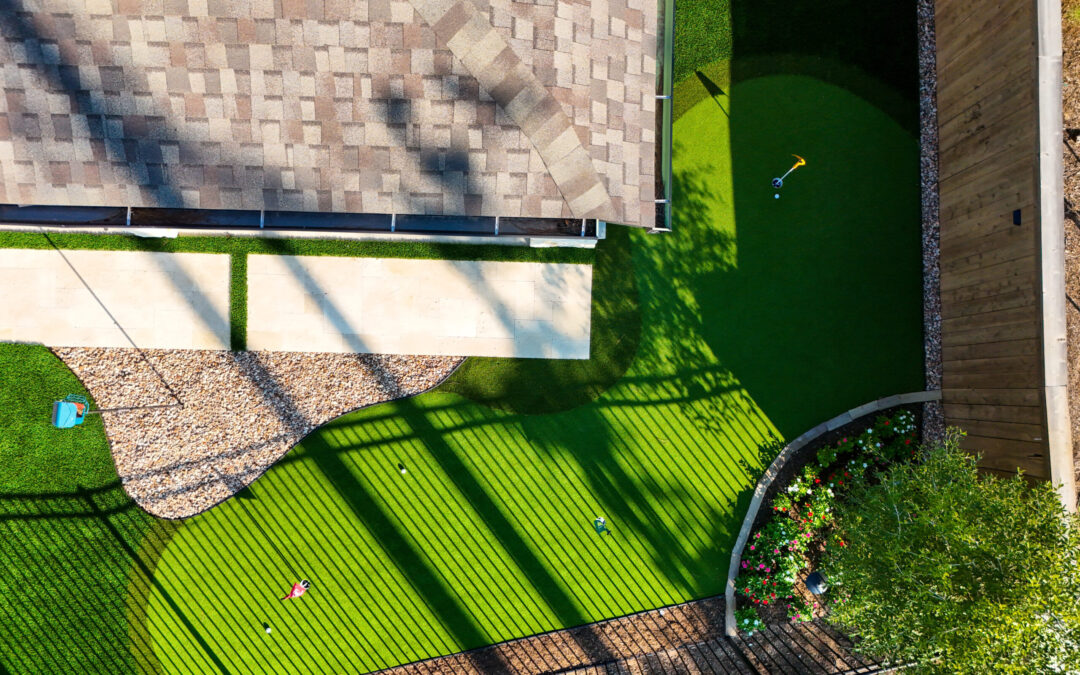
Today’s turf is far from one-size-fits-all. Options range from short, dense blades for a tailored, manicured look to longer, more natural styles with integrated thatch for realism. Specialized products are also available for putting greens, play areas, pet runs, and poolside applications—each engineered for its specific use.

The Cons of Artificial Turf
Higher Upfront Investment
Artificial turf requires a greater initial investment than sod or seed. Costs vary based on turf quality, site preparation, drainage requirements, and layout complexity. While turf often pays off over time through reduced maintenance and water use, it’s important to plan for the upfront expense.
Heat Retention
Turf can become warmer than natural grass in direct sunlight. While newer products include cooling technologies and lighter infill options, surface temperature should be considered—especially for barefoot areas. Strategic design choices such as shade structures, umbrellas, and pool placement can help mitigate this effect.
Installation Quality Is Critical
Artificial turf is only as good as its installation. Proper base preparation, grading, drainage, seam alignment, and infill selection are essential. Poor installation can lead to rippling, drainage issues, premature wear, or an unnatural appearance. This is not a DIY-friendly project if long-term performance and aesthetics matter.
Odor Management for Pet Areas
While turf itself doesn’t absorb odors, pet areas must be rinsed regularly. Choosing pet-specific turf systems with antimicrobial infill helps, but routine maintenance is still required to keep the space fresh.
Finite Lifespan
Unlike natural grass, which can be repaired or regrown indefinitely, artificial turf will eventually need replacement. High-traffic zones tend to wear first, and planning for future replacement is part of responsible ownership.
Environmental Considerations
Artificial turf is manufactured from synthetic materials, and disposal at the end of its life requires planning. Some manufacturers now offer recyclable options, helping offset environmental impact—but it remains an important consideration for eco-conscious homeowners.
Is Artificial Turf Right for Your Backyard?
Artificial turf is an excellent solution for many North Houston homes—particularly around pools, patios, putting greens, courtyards, and play areas where consistency and cleanliness matter most. When designed and installed correctly, it elevates the entire outdoor environment, delivering a refined, low-maintenance experience that aligns with luxury living.
However, it’s not a universal solution. Budget, heat exposure, usage patterns, and long-term plans should all be part of the decision-making process.
At Lagniappe Custom Pools, we approach turf the same way we approach pools and outdoor living: intentionally, thoughtfully, and with craftsmanship at the forefront. If you’re considering artificial turf in North Houston—whether for a poolscape, putting green, or full backyard transformation—we’re here to guide you through the options and ensure it’s done right the first time.
Schedule a consultation today and discover how artificial turf can enhance your outdoor living experience—with just a little lagniappe.